Can a landlord charge for carpet cleaning in Washington State? In most cases, no. Washington law says a landlord may not keep any part of your deposit for carpet cleaning unless there is documented wear to the carpet that goes beyond wear resulting from ordinary use. A routine cleaning charge tacked onto a move-out statement, with nothing to back it up, is not something the law allows. We clean a lot of rentals across Oak Harbor, Mount Vernon, and Burlington every September, and this is the question we hear more than any other.
The short answer under Washington security deposit law
A landlord can charge you for carpet cleaning when the carpet was damaged past ordinary use, and can enforce a cleaning term you signed in a written lease. A landlord cannot take money out of your deposit simply because carpet gets dirty when people live on it. That distinction, ordinary use versus damage, is written into the statute rather than left to argument. And the deduction still has to reach you on a written statement within 30 days, backed by paperwork. A line item that reads "carpet cleaning" with a number next to it and nothing attached does not meet the standard.
What Washington law says about deposits and carpet cleaning
The Residential Landlord-Tenant Act, RCW 59.18, is the framework. Four parts of it matter for carpet.
Wear from ordinary use is not damage
RCW 59.18.280 says no portion of a deposit may be withheld for wear resulting from ordinary use of the premises, and it names carpet directly: no portion may be withheld for carpet cleaning unless the landlord documents wear to the carpet beyond wear resulting from ordinary use. Everyday soil in a traffic lane is ordinary use. A urine-soaked closet is not.
The charge has to be in the lease you signed
Under RCW 59.18.260, a landlord cannot collect a deposit at all unless the rental agreement is in writing and states the terms and conditions under which the deposit may be withheld. The same section requires a written checklist at the start of the tenancy describing the condition and cleanliness of the place, including the carpets, signed by both of you, with a copy going to you. If you never got a move-in checklist, that is a real problem for the landlord's side of the case, not yours.
The itemized statement and the 30-day clock
Within 30 days after the tenancy ends and you have vacated, the landlord has to mail you a full and specific written statement of the basis for keeping any of the deposit, plus whatever is left over. It goes to your last known address. Miss the deadline and the statute says the landlord is liable for the full deposit and gives up the right to argue about it, with a court free to award up to twice the deposit for an intentional refusal, plus costs and attorney fees.
The three things a landlord has to be able to show
Put together, a carpet cleaning deduction in Washington rests on three things: a written agreement saying such deductions may be taken, a documented condition problem worse than ordinary use, and paperwork proving the cost. RCW 59.18.280 asks for copies of estimates received or invoices paid to substantiate damage charges, and receipts plus time and hourly rate if the landlord did the work in-house. Missing any one of the three weakens the charge.
When a landlord can legitimately charge you for carpet cleaning
A cleaning clause you agreed to in writing
Plenty of charges are legitimate, and it is worth being honest about that. If your lease says the carpets will be professionally cleaned at the end of the tenancy and you signed it, that is a term of the contract. Many Oak Harbor and Skagit County leases have exactly this clause, and the cleanest way to satisfy it is to have the work done yourself and hand over the receipt rather than let the landlord arrange it and bill the deposit.
Damage beyond ordinary use, like pet urine, burns and tears
Ordinary use does not cover a cigarette burn, a bleach spot, a tear from dragging furniture, or pet urine that has soaked through to the pad. Urine is the big one in rentals, because the smell keeps coming back long after the surface looks fine. If that is your situation, honest pet stain and odor removal before the walkthrough beats a deduction you cannot argue with.
What happens if you already paid a non-refundable cleaning fee
A non-refundable cleaning fee is legal in Washington under RCW 59.18.285, with conditions. The agreement has to be in writing and clearly specify that the fee is non-refundable, and non-refundable money may not be labeled a deposit or part of one. If your agreement calls the same money a deposit, or never says in writing that it is non-refundable, the statute says it is treated as a refundable deposit. And if you already paid a cleaning fee, ask why cleaning is being deducted again. You should not pay for the same job twice.
When a landlord cannot charge you for carpet cleaning at move-out
Ordinary traffic wear, matting and fading
The flattened lane from the front door to the kitchen, the matted patch where the couch sat, a strip faded by a south-facing window, general dinginess after a couple of years of ordinary life: that is wear resulting from ordinary use, and the statute says a deposit may not be withheld for it. It does not become damage because it looks tired in a photograph.
Carpet already at the end of its life when you moved in
Carpet wears out. If it was already old, thin, and matted the day you got the keys, a tenancy that ends with it old, thin, and matted has not cost the landlord anything. This is exactly what the move-in checklist is for, and why a landlord who skipped it has so little to stand on.
No move-in checklist and no documentation
No signed checklist describing the condition and cleanliness of the carpet at the start, no before-and-after evidence, no invoice attached to the statement. A deduction built on none of those is a number somebody wrote down. You are entitled to ask what it is based on, in writing.
How to protect your deposit before you hand back the keys
Most deposit disputes are won or lost before anyone argues about them. Three habits do nearly all the work.
- Take dated photos of the same rooms as the move-in checklist. Same rooms, same angles, empty, in good light. Do it on move-in day too if you still can. A matched pair of photos ends most disagreements before they start.
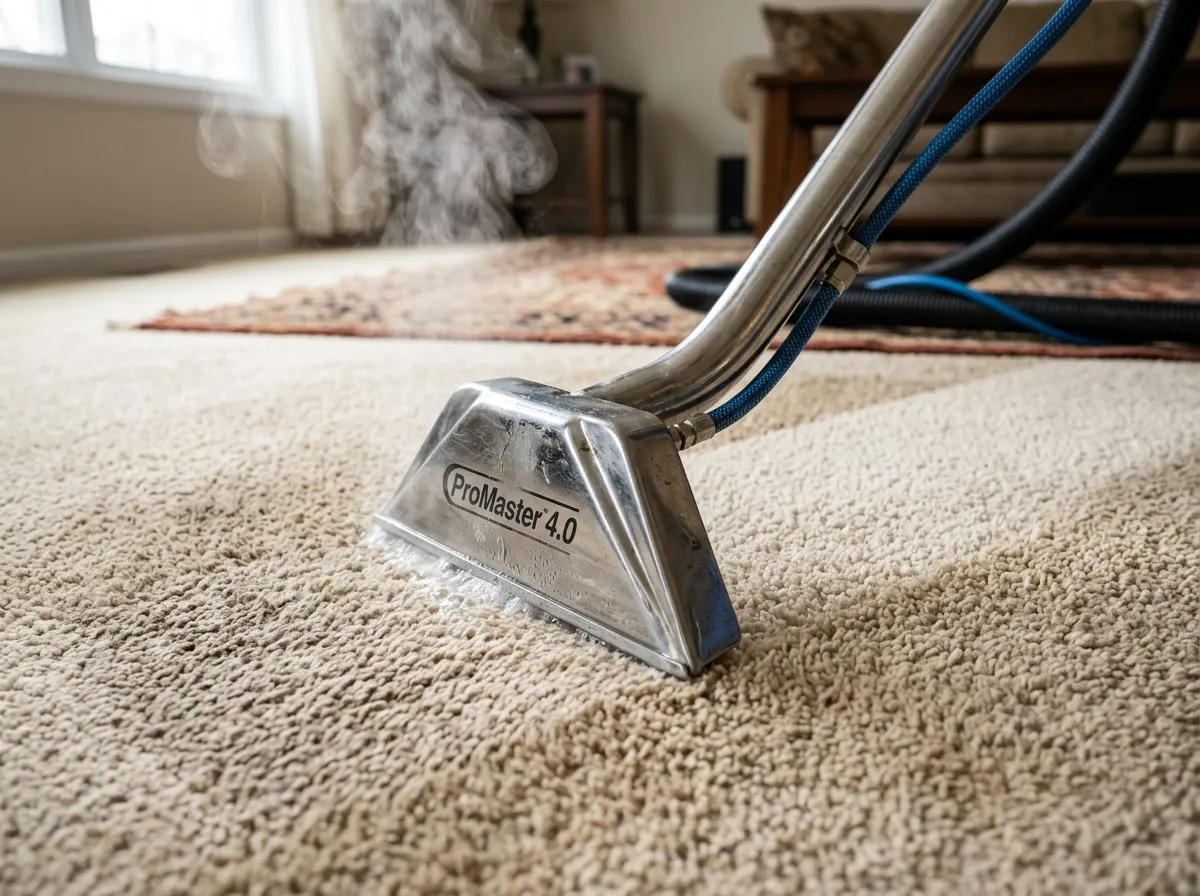
- Have the carpet professionally cleaned and keep the itemized receipt. A dated invoice on company letterhead listing the rooms cleaned is hard to argue with. That is the real value of a move-out carpet cleaning receipt, and why so many September calls come from renters with a walkthrough on the calendar.
- Give a forwarding address in writing. The statement goes to your last known address. Put the new address in writing, keep a copy, and make sure it is somewhere you will actually collect mail during those 30 days.
What to do if you have already been charged
Ask for the documentation in writing. Request the signed move-in checklist, the itemized statement, and the estimates or invoices behind the carpet line. Keep it short, civil, and in writing so there is a record. A lot of charges get dropped right here, because the paperwork the statute asks for was never assembled. If the answer does not come, small claims court is the usual next step for a deposit and it does not require a lawyer. The Washington Attorney General's office publishes plain-language landlord-tenant resources, including how to use small claims and where to find legal help.
Base housing at NAS Whidbey works differently
This is the part national tenant-rights articles skip. In base housing at NAS Whidbey Island you are not going through the RCW deposit process at all. The housing operator runs its own move-out inspection, with its own standards and its own paperwork, and what counts as acceptable is set by that inspection rather than by the deposit rules above. The checklist you are measured against is the housing office's, so the fix is to meet it rather than argue wear and tear. We have cleaned carpet for Navy families in Oak Harbor for decades and we know what those inspections look for. A PCS date with an inspection on it is a scheduling problem, not a legal one.
A note for landlords and property managers
Nothing here is anti-landlord. The same rules that protect a tenant protect an owner who does the paperwork. Do the move-in checklist and get it signed. Photograph the carpet at turnover both ways. Keep the invoice. When there is genuine damage past ordinary use, a documented file makes the deduction stick, and when there is not, you have saved yourself a dispute. We itemize every turnover invoice by room, because that is the document that ends up in the file.
This is general information, not legal advice
We clean carpet. We are not attorneys, and nothing on this page is legal advice or a substitute for it. Statutes change, and the deposit rules were amended in recent years, so read the current text of RCW 59.18 yourself or talk to someone qualified before relying on any of it. The Attorney General's office is a good starting point, and tenant advocacy organizations across Washington offer free counseling on deposit disputes.
Questions tenants ask us every September
Can a landlord charge you for carpet cleaning when you move out in Washington?
Only if the landlord can document wear to the carpet that goes beyond wear resulting from ordinary use of the premises. RCW 59.18.280 names carpet cleaning specifically. A charge for routine cleaning after a normal tenancy, with nothing documented, is not something a Washington landlord may take out of your deposit. A cleaning clause in a lease you signed is a separate matter and can be enforced on its own terms.
Is carpet cleaning normal wear and tear in Washington?
The soil a carpet picks up from being lived on normally is treated as wear resulting from ordinary use, and Washington law says no part of a deposit may be withheld for that. Flattened traffic lanes, faded areas by a window, and general dinginess after a year or two are ordinary use. Pet urine, burns, tears and set stains are not, and those are the ones that end up on a statement.
How long does a landlord have to return a security deposit in Washington?
Thirty days. Within 30 days after the rental agreement ends and you have moved out, the landlord has to mail you a full and specific written statement of anything being kept, along with the rest of your deposit. It goes to your last known address, which is why a forwarding address in writing matters. Missing the deadline carries real consequences for the landlord.
Can a landlord charge a non-refundable cleaning fee in Washington?
Yes, but only if the rental agreement is in writing and clearly says the fee is non-refundable. RCW 59.18.285 also says non-refundable money cannot be called a deposit or part of a deposit. If the agreement does not say it plainly in writing, the statute says the fee is treated as a refundable deposit. Watch for the same cleaning being charged twice, once as a fee and again as a deduction.
Do I have to have the carpet professionally cleaned before I move out?
Only if your written lease says so. Washington law lets a landlord enforce a cleaning term you actually agreed to in writing, so read the lease before you assume. With no such clause you are not obligated to hire anyone, though many renters do it anyway because a dated receipt ends the argument before it starts.
Does a landlord have to prove carpet damage to keep part of my deposit?
Yes. The written statement has to be specific, and RCW 59.18.280 requires copies of estimates received or invoices paid to substantiate damage charges. If the landlord or an employee did the work, that means receipts for materials plus a statement of the time spent and the hourly rate charged. Ask for those documents in writing if none came with the statement.
If you are moving out on Whidbey Island or in Skagit County this fall and want the carpet handled properly before the walkthrough, we can help. A Clean Carpet Co has been doing this since 1989, from Oak Harbor and Coupeville to Mount Vernon and Burlington, with truck-mounted hot water extraction, no ferry surcharge, and an itemized invoice you can hand straight to your landlord. Every job is quoted individually, so get in touch for a free quote and tell us your walkthrough date.